


Pancakes for one are the perfect breakfast or snack that prevents waste without sacrificing taste or texture. This single-serving pancake recipe comes together with a handful of simple ingredients for a protein-forward meal that’s sweet, super fluffy, and so easy to make!

These gluten-free single-serve pancakes started as my little Saturday ritual. Almost every weekend, I mix up a quick batch for myself—nothing fancy, just simple ingredients, a little extra protein, and a warm stack of pancakes that feels like a small treat to start the morning. There’s no big mess and no giant batch… just one serving, exactly how I like it.
Over time, I realized this recipe works for more than just slow weekends. It’s also a great Mother’s Day brunch idea, especially if kids want to make breakfast for mom without a complicated recipe. Everything comes together quickly, cooks in minutes, and the single-serve portion keeps things simple, eliminating the excessive amount of extras I sometimes have when making Swedish oven-baked pancakes or sheet pan chocolate protein pancakes.
Another bonus: these pancakes are freezer-friendly, so you can double the batch and save extras for busy mornings. Whether you’re making them for yourself or sharing with family.
My Top Tips Before You Begin
- Batter Tip: Keep in mind that you’ll likely need to adjust the batter as you go, depending on the protein powder or gluten-free flour. Don’t worry. I provide suggestions below!
- Pan & Heat Tip: If you’re using a non-stick pan instead of a griddle or cast iron, cook over medium heat rather than medium-high. Non-stick pans tend to run hotter, so lowering the heat helps the pancakes cook through evenly without over-browning the outside. Keep in mind that every pan reacts a little differently, so adjust the heat as needed for best results.
- Make It Your Own Use the ingredient options as a guide and find your personal sweet spot. You can swap the cottage cheese for Greek yogurt, and use rolled oats or oat flour depending on what you have on hand. My personal favorite is Greek yogurt + oat flour with a splash of vanilla (and a scoop of protein).
Ingredients You’ll Need
This is not the full ingredient list, just my notes regarding the key components. Please be sure to scroll down to the recipe card for the complete details!

- Cottage Cheese or Greek Yogurt – This helps create the fluffy consistency we want while adding protein.
Dairy-Free Option – Use ¼ cup non-dairy yogurt instead of cottage cheese (Note that you will need to adjust the batter thickness since yogurt isn’t as thick as cottage cheese or Greek yogurt. Simply add a little extra gluten-free flour to do so.)
- Egg – These act as a binder, helping the pancake hold its shape. I haven’t tested this recipe with vegan egg substitutes and can’t guarantee your results if you do.
- Gluten-Free Rolled Oats – Substitute gluten-free oat flour or a gluten-free all-purpose flour blend, if preferred. If you’re using oat flour, you might need to add about 2 tablespoon milk to loosen the batter.
- Protein Powder – Use any vegan or regular protein powder you like best. I recommend a fairly neutral flavor, such as vanilla, but feel free to get creative. You can also replace the protein powder with equal amounts of gluten-free oat flour or gluten-free all-purpose flour. For a slightly higher-protein option (without protein powder), use 2 Tablespoons of almond flour and 1 Tablespoon of oat flour.
Protein Powder Notes: Protein powder affects texture. Whey or egg white protein yields the fluffiest pancakes. Plant-based proteins (like pea, rice, or blends) tend to absorb more liquid, which can make the batter thicker and slightly denser. Add 1–2 tablespoon milk as needed to loosen the consistency.
For the most consistent results, use a protein powder you’ve baked or cooked with before.
- Optional Sweetener – I like to add 1-2 teaspoons of sugar, maple syrup, or honey to help soften the batter and improve browning.
How to Make Pancakes for One… in a few Easy Steps!
Blend the oats. If using rolled oats, add all the wet ingredients and dry ingredients to a blender and pulse until a smooth batter forms. If using gluten-free flour, whisk all the ingredients in a bowl just until smooth. Let the batter rest at room temperature. This helps it thicken, which creates a fluffier consistency!


Check Batter Consistency: The pancake batter should be thick but pourable, similar to traditional pancake batter. Add 1-3 Tablespoons of milk if it’s too thick, or ½-1 Tablespoon of oat flour, gluten-free flour, or flax meal if it is too thin.
Cook. Heat a skillet or griddle over medium to medium-high heat. Melt butter or non-dairy butter to prevent sticking. Then, pour ¼ cup of pancake batter into the skillet.


Pro Tip: Start with the pan at medium heat and test a small amount of batter (like a silver dollar pancake). This helps you gauge the right temperature. If it cooks through without browning too fast, you’re good to go—just adjust the heat as needed after the first batch.
Flip. Cook until bubbles form on the surface, and the edges look set. Then, flip and continue to cook until the pancake is golden brown and the batter is set. Repeat as needed, greasing the pan before adding more batter.
Enjoy. Add the topping of your choice and enjoy warm!


Troubleshooting Tip: If your pancakes turn out a little dense or dry, it’s usually an easy fix. Try reducing the protein powder slightly (if using), adding a splash of milk, or mixing in a teaspoon of oil for extra moisture. Also keep an eye on cook time—protein-heavy batters cook faster and can dry out if overdone.
Topping Ideas and Serving Suggestions
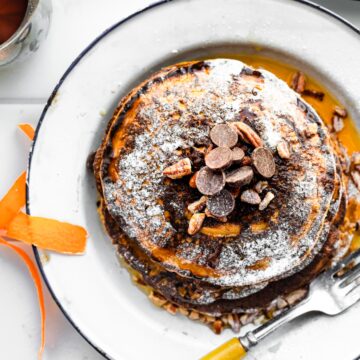
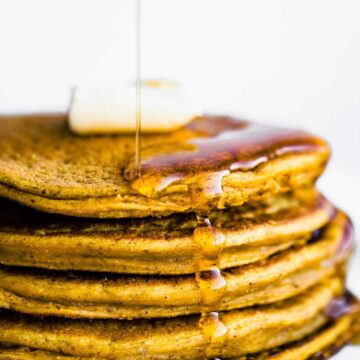
I serve my fluffy pancakes for one with a little bit of maple syrup and extra butter. That said, this single-serving pancake recipe is also delicious topped with fresh berries, bananas, cashew butter, sunflower seed butter, peanut butter, almond butter, chocolate chips, or coconut whip, all taste great.
With protein, carbs, healthy omega fats, and fiber, I find this recipe plenty filling on its own. However, if you want to serve it as part of a breakfast spread, try adding options like a baked asparagus frittata, oven baked scrambled eggs, a cottage cheese smoothie, or a banana latte!

More of Our Favorite
Gluten-Free Pancake Recipes

Gluten-Free Pancakes for One Recipe
- Total Time: 10-12 minutes
- Yield: Makes about 2 medium or 3 small pancakes 1x
- Diet: Gluten-Free, Low-Carb, Vegetarian
Description
Soft, fluffy gluten-free pancakes made with a handful of simple ingredients and ready in minutes. This single-serve recipe is easy, high in protein, and perfect for a quick, nourishing breakfast.
Ingredients
- ¼ cup cottage cheese OR 2% or full fat Greek yogurt (see notes for dairy-free option)
- 1 Large egg
- 2.5 Tablespoons (15–16 grams) gluten-free rolled oats, oat flour, or gluten-free all purpose flour.
- 20–25 grams (2.5 Tablespoons) protein powder (see notes for tips)
- ½ teaspoon baking powder
- Pinch of salt
- Optional- pinch of cinnamon
- Optional: 1-2 teaspoons sugar, maple syrup, or honey helps soften high-protein batters and improves browning.
- Only as needed ingredients: ½ to 1 tablespoon Gluten-free flour, protein powder, or flax meal if batter is too thin. 1-3 tablespoon non-dairy milk if batter is too thick.
Instructions
- If using rolled oats, add all ingredients to a high-speed blender and blend until combined. It’s okay if there is still a bit of texture left from the oats.
- Note: If you don’t have a blender, you can use an immersion blender. If using gluten-free flour or oat flour, whisk all ingredients together in a bowl until smooth.
- Let the batter rest for at least 10 minutes. This helps the batter thicken and creates fluffier pancakes.
- Heat a skillet or griddle over medium to medium-high heat and lightly grease with butter or non-dairy butter. If using a non-stick pan, see notes for heat adjustments.
- Pour ¼ cup batter onto the hot skillet for each pancake. Cook until bubbles form on the surface and the edges look set, about 2–3 minutes.
- Flip and cook for another 1–2 minutes, or until golden and cooked through.
- Serve warm with your favorite toppings.
Notes
Cooking Temperature: If using a non-stick pan instead of a griddle or cast iron, cook over medium heat rather than medium-high. Non-stick pans tend to run hotter, so lowering the heat helps the pancakes cook through without over-browning. Adjust as needed, as every pan heats a little differently.
Dairy-Free Option Use ¼ cup non-dairy yogurt instead of cottage cheese (not you will need to adjust batter thickness since yogurt isn’t as thick as cottage cheese or Greek yogurt.
Protein Powder Notes: Protein powder affects texture. Whey or egg white protein yields the fluffiest pancakes. Plant-based protein powders absorb more liquid and can make the batter thicker, sometimes more dense but still delicious—add 1–2 tablespoon milk as needed. For best results, use a protein powder you’ve baked or cooked with before.
Protein Substitutes: Replace protein powder with equal amounts gluten-free oat flour or gluten-free all-purpose flour. For a slightly higher-protein option, use 2 Tablespoons almond flour + 1 Tablespoon oat flour.
Batter Consistency: Batter should be thick but pourable, similar to traditional pancake batter. Add 1–3 Tablespoons milk if too thick, or ½–1 Tablespoon oat flour, gluten-free flour, or flax meal if too thin.
- Prep Time: 5 minutes
- Cook Time: 5-7 minutes
- Category: Breakfast
- Method: Stove Top
- Cuisine: American
Nutrition
- Serving Size: 2 medium or 3 small pancakes (no topping)
- Calories: 240–255
- Sugar: 2-3g
- Sodium: 280–340 mg
- Fat: 6-8 grams
- Saturated Fat: 3-4 grams
- Carbohydrates: 15-17 grams
- Fiber: 2-3 grams
- Protein: 23–26 grams
- Cholesterol: ~185–200 mg







If you want a gluten-free, high-protein breakfast and are tired of cottage cheese and/or eggs, you must try these delicious protein pancakes. I’ve tried several variations, and all are good; my favorite is cinnamon protein powder, oat flour, and yogurt. I do recommend cast iron and cooking at medium-low heat, as they do brown quickly. I’m definitely keeping this recipe on my quick breakfast rotation.
Thanks so much for your feedback JoAnn! So helpful. I love all the versions you made and I agree, I love the oat flour and yogurt too. Definitely need to try it with a cinnamon protein, yum!!