


Learn which grains you can eat on a gluten-free diet with this Guide to Gluten-Free Grains! We are highlighting a variety of gluten-free grains and whole grains! We will be covering what they are, why they’re good for you, how to use them in recipes, and so much more!

Get Ready For Gluten-Free Grains
This guide covers all of our favorite gluten-free grains, the nutritional benefits they offer, how to cook them, tasty recipes, and even more! Our goal is to help you understand these grains and bust a few myths along the way! Don’t worry, we’ll also share how to include them in a gluten-free diet for meals the whole family can enjoy whether they have Celiac Disease or not!

About Celiac Disease and Gluten
If you’re unfamiliar, Celiac Disease is an autoimmune condition in which the ingestion of gluten causes harm to the small intestine. When gluten is ingested, the body attacks the small intestine which damages the villi that promote nutrient absorption. As a result, nutrients cannot be properly utilized by the body, and side effects such as bloating, diarrhea, constipation, fatigue, and more can occur. Read more about the disease, symptoms, and treatments here.
What is Gluten?
Gluten is a protein found in grains such as wheatberries, durum, semolina, spelt, farino, farro, rye, barley, and more. It helps these grains maintain their shape and is often referred to as the “glue” that holds foods together. (Source)
What are Whole Grains?
Whole grains are those that have not been processed to remove any part of the grain kernel. This means they contain the bran, germ, and endosperm. As a result, they are high in fiber and nutrients.
What Whole Grains are Gluten-Free?
While all grains have bran, germ, and endosperm, they do not all contain gluten proteins that cause digestive disruptions to those with Celiac Disease or gluten intolerances.
Therefore, to help you navigate which are “safe” to consume, we narrowed the list down to 7 of our favorite gluten-free grains including buckwheat, oats, quinoa, millet, sorghum, amaranth, and teff.

Buckwheat
- What It Is: Considered a “pseudo-grain,” buckwheat is a seed that is often consumed as a cereal but does not grow as a grass.
- Health Benefits: Although heaviest in carbs, one serving of buckwheat contains 13.3 grams of protein and is high in fiber. It’s also rich in minerals such as manganese, copper, and magnesium. As a result, buckwheat can help improve blood sugar control, improve heart health, and more! (Source)
- Taste: The flavor is nutty, similar to that of whole wheat flour or rye.
- Recipes: Try making your own Buckwheat Flour that you can use to make these amazing Vegan Banana Buckwheat Waffles. This Maple Buckwheat Granola is made with buckwheat groats, nuts, gluten-free rolled oats, spices, and is lightly sweetened with maple syrup.


Oats
- What It Is: Oats are a type of cereal grain derived from grass plants. The edible seeds of the oat grass are harvested and used to create the many variations of oats sold in stores including oat groats, steel cut oats, rolled oats, and quick oats.
- Health Benefits: Oats are high in fiber and provide a wide variety of vitamins and minerals. As a result, they can help regulate digestion, lower cholesterol levels, and improve blood sugar levels. (Source)
- Taste: On their own, oats are pretty bland. However, they easily take on the flavor of whatever they are paired with!
- Recipes: We love our oats around here and have lots of oatmeal recipes like these Blueberry Overnight Oats, Strawberry Chia Overnight Oats, and Creamy Pumpkin Overnight Oats. We also love them in desserts like this Gluten-Free Apple Oat Crisp, a Vegan Berry Rhubarb Crumble, or Healthy Gluten-Free Oatmeal Cookies!

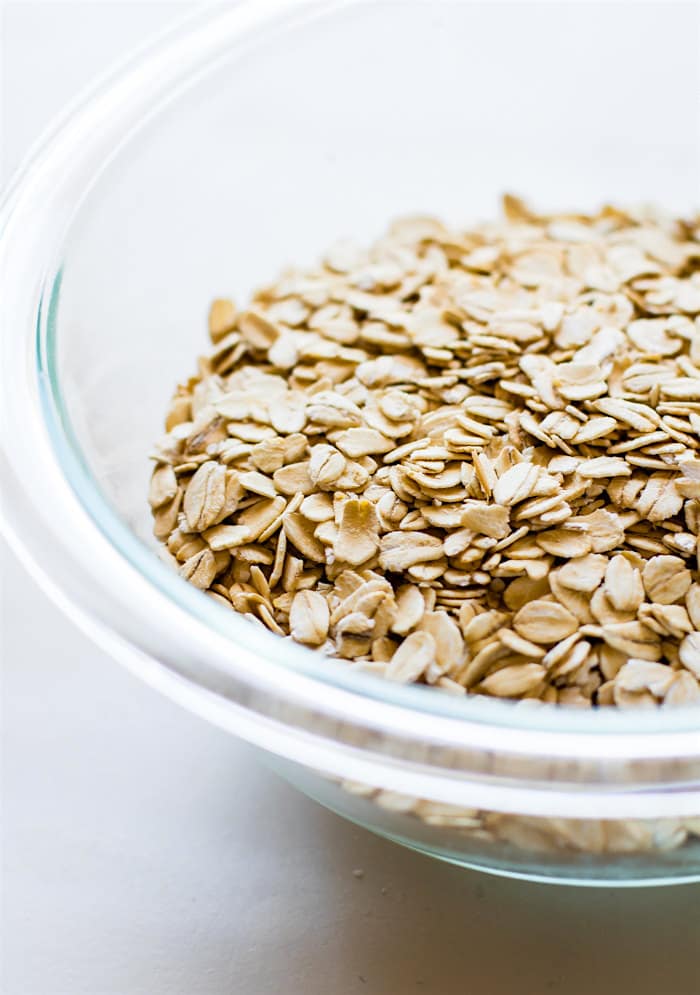
Cross Contamination Note: Not all oats found in the store are gluten-free! Due to the fact that oats are often produced in factories alongside other grains, cross-contamination often occurs. Therefore, it is important to make sure that the oats you purchase have been manufactured in a guaranteed gluten-free facility!
Quinoa
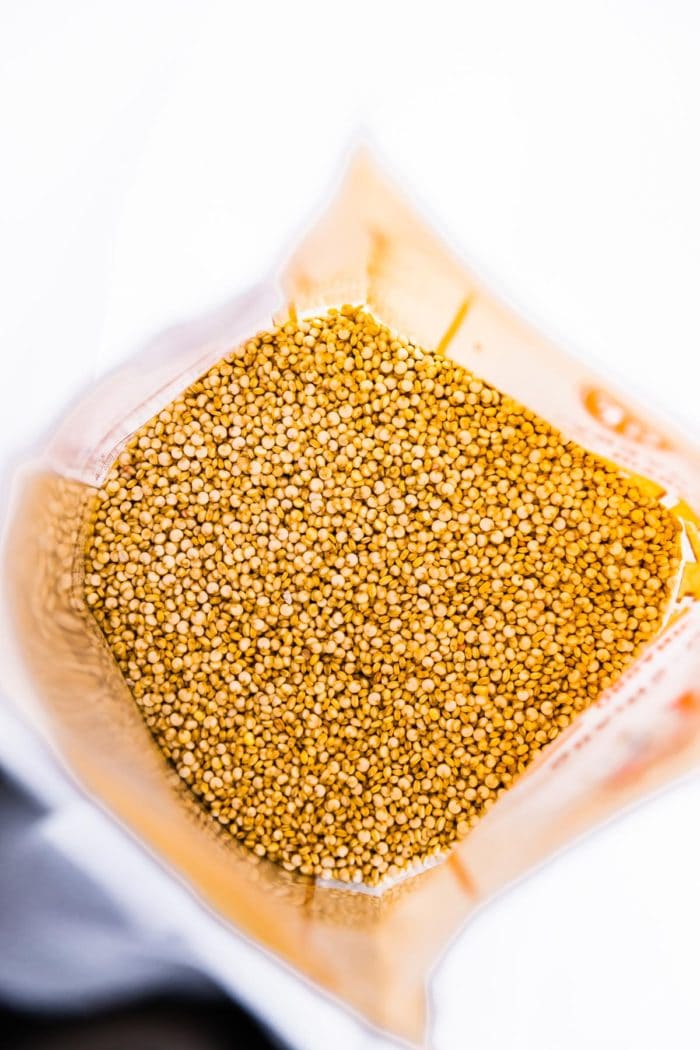
- What It Is: A “pseudo-grain,” quinoa is an edible seed that comes in a wide variety of colors including black, red, yellow, and white.
- Health Benefits: Extremely nutritious, quinoa is high in protein, fiber, and healthy fats. It’s also a great source of vitamins and minerals including manganese, phosphorous, magnesium, folate, and vitamin B1! (Source)
- Taste: Depending on what color you use, every variety of quinoa has a slightly different taste. The lighter colors are milder while the darker varieties have a slightly more earthy flavor.
- Recipes: We love adding fiber rich quinoa to dishes like this BBQ Tempeh Salad, a Fiesta Quinoa Bowl, and gluten-free Tabouli. Or try our Mexican Quinoa Skillet or a vegan Greek Quinoa Burger.

Millet
- What It Is: Millet is a type of cereal grain that is part of the grass family.
- Health Benefits: Millet is high in protein and fiber and contains quite a few antioxidants. It can assist with managing diabetes conditions and improve digestion. (Source)
- Taste: As far as grains go, millet has a fairly sweet flavor similar to that of corn.
- Recipes: This Creamy Mushroom Risotto Skillet is a delicious, nutrient-dense main course or side dish.


Teff
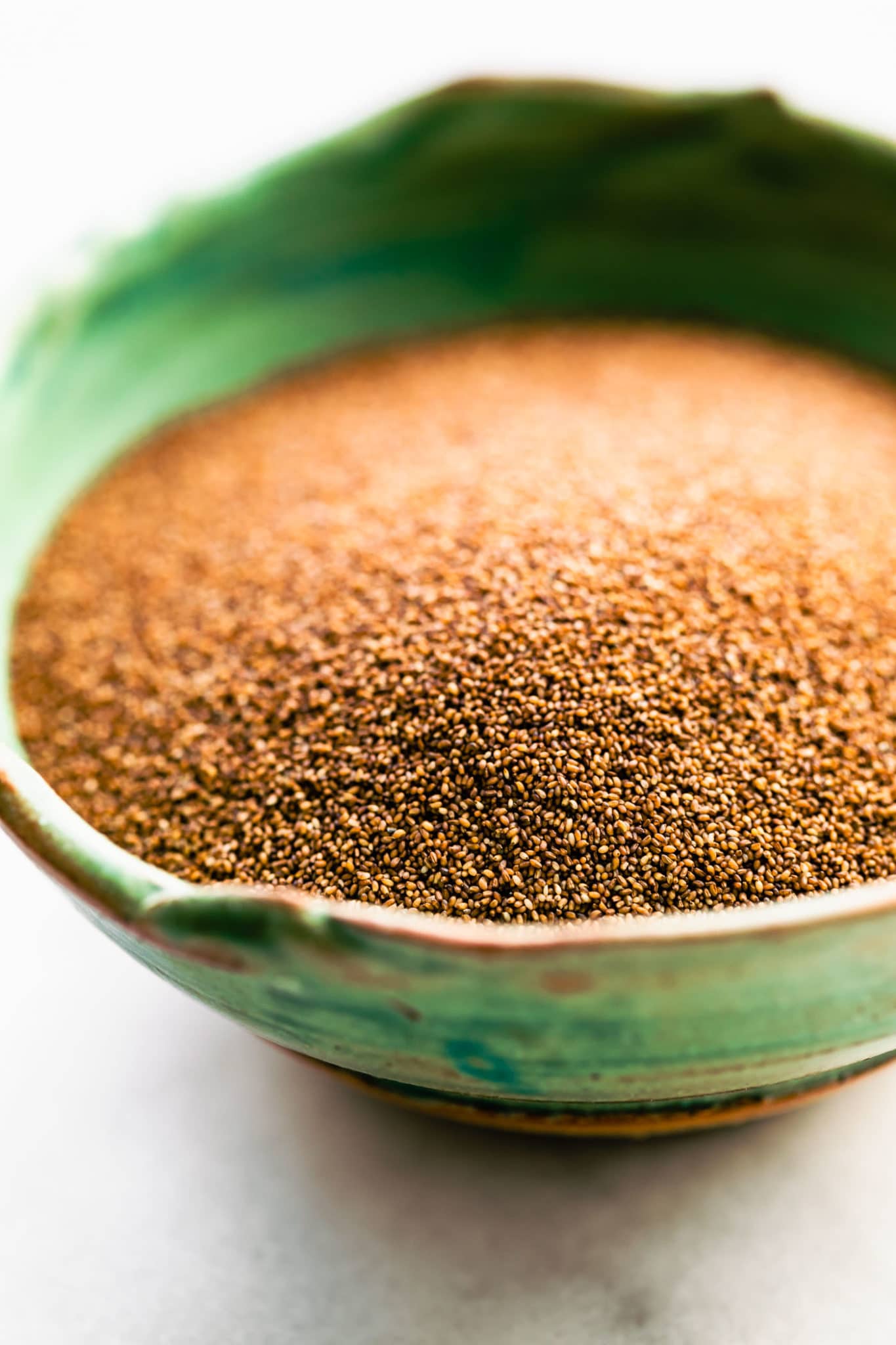
- What It Is: The smallest grain in the world, Teff is a nutrient-rich pseudograin that originated in Ethiopia and packs 13.3 grams of protein and eight amino acids per serving. (Source)
- Health Benefits: As a result of its nutrient content, consuming teff may help maintain strong bones, boost the immune system, manage diabetes, improve digestion, improve heart health, and more! (Source)
- Taste: Containing a fairly mild flavor, the flavor of teff is slightly nutty or earthy but can easily take on the taste of whatever it is paired with.
- Recipes: Teff injera is a naturally fermented flatbread. Injera has a deliciously nutty and sourdough flavor that compliments traditional Ethiopian stews.
Two More Gluten-Free Grains We Love!
Sorghum
- What It Is: Part of the grass family, sorghum is a cereal grain that originated in Africa. It’s commonly used in recipes and exists in a variety of forms such as whole grain sorghum, pearled grain sorghum, sorghum syrup, and popped sorghum.
- Health Benefits: Sorghum is a low fat gluten-free grain that is rich in protein, fiber, B vitamins, and micronutrients.
- Taste: Sorghum has a mild, earthy flavor that is often described as being very similar to wheat.
Amaranth
- What It Is: Another “pseudo-grain,” amaranth is a complete protein and is loaded with manganese, magnesium, phosphorous, and iron. (Source)
- Health Benefits: Amaranth can help reduce the risk of heart disease, decrease inflammation, support your immune system, aid in weight management, and more. (Source)
- Taste: One of the more distinct gluten-free grains, amaranth can be described as having a nutty flavor.
Common Gluten-Containing Grains
Okay, now that we’ve covered our top gluten-free whole grain oats, we thought we should mention a few whole grains that do contain gluten. Of course, there is nothing bad about these foods. In fact, they offer some great health benefits! However, if you do suffer from Celiac Disease or gluten intolerance, it’s probably best to avoid including them in your diet.
- Wheat
- Durum
- Semolina
- Spelt
- Farro
- Rye








Rate & Comment